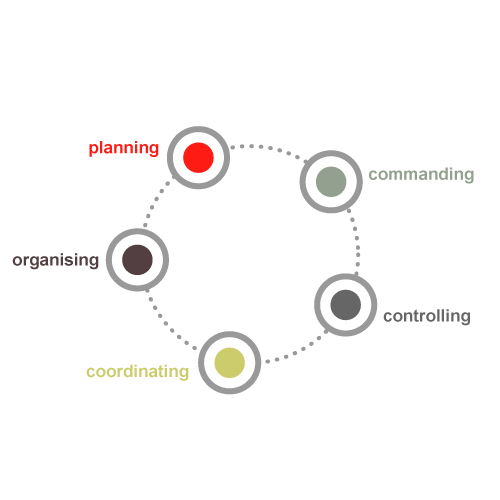
In the late 1960's, Henry Mintzberg made a research regarding the managerial role. According to him managers perform to different but interrelated roles which is consists of major 3 categories.

Manager's job is not a simple one but a complex one. Many factors of the environment have affect on the performance or working of the organization. Managers play the major and vital role to control the affect of these factors. These steps taken by the managers are called managerial role.
(A) Interpersonal Role:
1- Figure Head:
Under figurehead's role, the manager performs a number of routine duties which are described as under.
i- Legal Nature Duties:
It includes signing the legal documents of important nature. For the purpose of evidence there is need of signatures. For making the contracts e.g contract of sale, purchase etc we are needed to sign the contract.
ii- Social Nature Duties:
It means to greet and welcome the visitors.
2) Leader:
One who has the ability & authority to influence others is called leader. The manager is responsible for giving directions to employees, resolving their conflicts, giving training to the sub-ordinates, staffing and selecting the most effective channel of communication and all other activities relating to his sub-ordinates (employees)
3) Liaison:
He is responsible to maintain self developed network of contacts and informer. In other words, he maintains the contacts and relations with others. He is a co-operation on informer who contacts others through self-developed network.
B) Informational Roles:
Informational means the something which has some meanings for us. The managerial roles regarding collection and transmission of information is called informational role which is described as under.
1- Monitor:
He matches the organization with environment. He collects and receives the special information of wide variety through reading periodicals and reports, survey and by his personal contacts for through understanding of organization and environment. There is need to maintain the information about customers, Govt policies, supplies competitors, market forces globalization etc.
He acts as nerve center of internal and external information about the organization.
2) Disseminator:
The manager who receives information from outside through holding informational meetings and by phone calls and transmits it to the organization's members e.g information about modern technology. Some of the information is factual, some involves in interpretation and integration of diverse value positions of organizational influences.
3) Spokesperson:
The manager who provides the information to outsides on the behalf of organization through media and holding board meeting is called spokespersons. He provides the information like plans, policies, actions and results of organization.
C) Decisional Role:
The choose among the alternatives is called decision. The decision making is necessary for the solution of problems. In ordinary life we make many decisions. likewise, The managers have also to play following decisional roles.
1- Entrepreneur:
The manager searches organization and its environment. He finds the opportunities and also avails them and brings improvements in organization's projects. He formulates strategies and plans e.g. decisions for price etc. He also allocates the factors of production.
2- Resource Allocator:
A manager also makes decisions for allocations of resources in all departments e.g. in production department, selling and purchasing department etc. He makes budgets about these allocations keeping in view the income & expenses. He also decides about the sub-ordinates according to these absolutes. He is responsible to allocate the resources at correct time.
3- Disturbance Handler:
This manager is responsible for taking the corrective actions when organization faces important disturbances. he organizes the strategies through review sessions for the solution of crisis and disturbance.
4- Negotiator:
He is responsible for representing the organization at major negotiation such as participation in union contract negotiations or negotiations about contracts with the suppliers.
read more "Managerial Roles"

Manager's job is not a simple one but a complex one. Many factors of the environment have affect on the performance or working of the organization. Managers play the major and vital role to control the affect of these factors. These steps taken by the managers are called managerial role.
(A) Interpersonal Role:
1- Figure Head:
Under figurehead's role, the manager performs a number of routine duties which are described as under.
i- Legal Nature Duties:
It includes signing the legal documents of important nature. For the purpose of evidence there is need of signatures. For making the contracts e.g contract of sale, purchase etc we are needed to sign the contract.
ii- Social Nature Duties:
It means to greet and welcome the visitors.
2) Leader:
One who has the ability & authority to influence others is called leader. The manager is responsible for giving directions to employees, resolving their conflicts, giving training to the sub-ordinates, staffing and selecting the most effective channel of communication and all other activities relating to his sub-ordinates (employees)
3) Liaison:
He is responsible to maintain self developed network of contacts and informer. In other words, he maintains the contacts and relations with others. He is a co-operation on informer who contacts others through self-developed network.
B) Informational Roles:
Informational means the something which has some meanings for us. The managerial roles regarding collection and transmission of information is called informational role which is described as under.
1- Monitor:
He matches the organization with environment. He collects and receives the special information of wide variety through reading periodicals and reports, survey and by his personal contacts for through understanding of organization and environment. There is need to maintain the information about customers, Govt policies, supplies competitors, market forces globalization etc.
He acts as nerve center of internal and external information about the organization.
2) Disseminator:
The manager who receives information from outside through holding informational meetings and by phone calls and transmits it to the organization's members e.g information about modern technology. Some of the information is factual, some involves in interpretation and integration of diverse value positions of organizational influences.
3) Spokesperson:
The manager who provides the information to outsides on the behalf of organization through media and holding board meeting is called spokespersons. He provides the information like plans, policies, actions and results of organization.
C) Decisional Role:
The choose among the alternatives is called decision. The decision making is necessary for the solution of problems. In ordinary life we make many decisions. likewise, The managers have also to play following decisional roles.
1- Entrepreneur:
The manager searches organization and its environment. He finds the opportunities and also avails them and brings improvements in organization's projects. He formulates strategies and plans e.g. decisions for price etc. He also allocates the factors of production.
2- Resource Allocator:
A manager also makes decisions for allocations of resources in all departments e.g. in production department, selling and purchasing department etc. He makes budgets about these allocations keeping in view the income & expenses. He also decides about the sub-ordinates according to these absolutes. He is responsible to allocate the resources at correct time.
3- Disturbance Handler:
This manager is responsible for taking the corrective actions when organization faces important disturbances. he organizes the strategies through review sessions for the solution of crisis and disturbance.
4- Negotiator:
He is responsible for representing the organization at major negotiation such as participation in union contract negotiations or negotiations about contracts with the suppliers.